The Two Things That Explain Most Land Values
Forget the noise. When it comes to what land is really worth, the answer is simpler than most people think.
People love to overcomplicate land values. Ask someone why a quarter section sold for top dollar and you'll hear about interest rates, trade policy, the price of corn last Tuesday, and whatever the Fed chair said at breakfast.
Those things matter. But they usually aren't the biggest drivers.
If you strip land value down to its core, two things explain most of the price a property ultimately sells for: where the land is and what the land physically is.
That's it. Two things. And once you understand them, the land market starts making a lot more sense.
Location Is More Than a Pin on a Map
When we talk about location, we're not just talking about the county or the township. We're talking about the whole story of a place.
Is this an area where land rarely comes up for sale? Are the surrounding neighbors strong operators with strong balance sheets? Does the region support specialty crops, or does it sit in a corridor where development pressure is quietly building?
Here's something that surprises people: some of the strongest land values in the Upper Midwest aren't in the most famous farming counties. They're in pockets where ownership almost never turns over. When something finally does come to market in those areas, the competition can be fierce because buyers know the next opportunity might be years away.
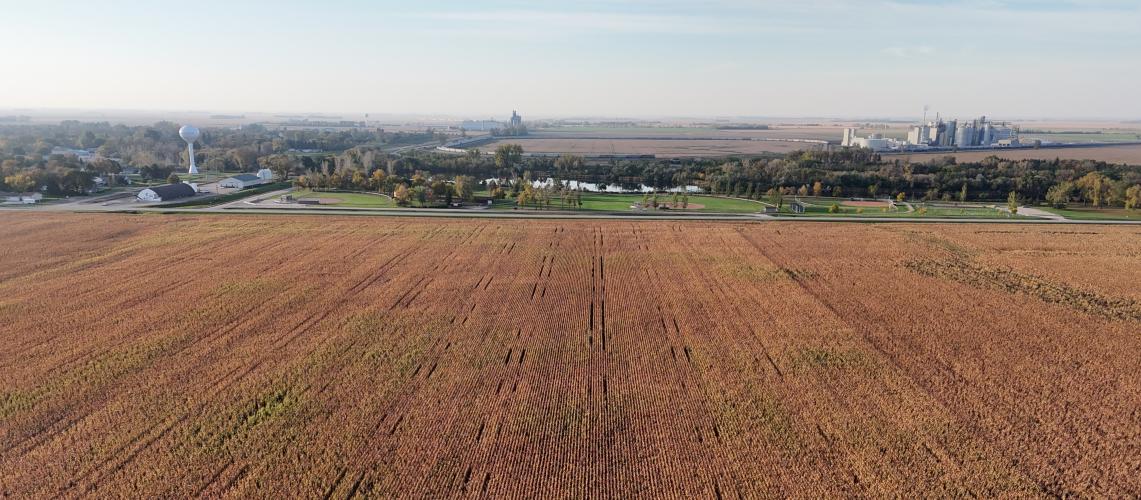
Proximity matters too. Land near grain elevators, ethanol plants, rail lines, or growing towns often carries a premium that has nothing to do with soil type. Infrastructure creates efficiency, and efficiency creates value.
Physical Characteristics Are the Other Half
Now let's talk about the dirt itself.
Land that consistently performs tends to share a few traits: loamy soils, good natural drainage, uniform soil types across the field, and topography that lets modern equipment run efficiently. A combine operator will tell you in about five minutes whether a field is a pleasure to farm or a headache.
Buyers pay premiums for predictability. Land that doesn't flood. Land that avoids the worst frost pockets. Land that doesn't need $1200 per acre in tile drainage just to hit average yields. When a field produces consistent results year after year, it lowers risk, and lower risk always attracts stronger money.
Consider this: USDA soil productivity ratings have been around for decades, and the highest rated ground almost always commands the highest prices. It's not a coincidence. The market has been confirming the same fundamentals for generations.
Why These Two Things Compound Over Time
You can improve land with drainage, fertility programs, or clearing old fencerows. But you cannot move it. You can't recreate the same soils somewhere else, and you can't manufacture proximity to a strong agricultural region.
That's why location and physical attributes tend to compound. They attract better tenants, stronger buyers, and deeper competition whenever a property hits the market.
Markets will move up and down. Commodity cycles will come and go. But the fundamentals that drive land value? Those stay put.
And in the long run, they explain more about price than almost anything else.
Author Bio: Steve Link is a broker with Pifer's Auction & Realty, specializing in farm, ranch, and recreational land across the Upper Midwest. Steve grew up on a farm near Milan, Minnesota and earned a degree in Natural Resource Management from North Dakota State University (NDSU). With decades of experience in land sales, auctions, and land management, Steve works closely with landowners, investors, and agricultural operators to help them make informed decisions about one of their most valuable assets, land.