
Could a Delaware Statutory Trust Be the Best Crop You Never Planted?
If you've owned farmland for decades, chances are your cost basis is low. That's a great problem to have...until it's time to sell.
I've sat across the table from many landowners who have built tremendous wealth through appreciation, only to realize that a large portion of the sale proceeds could disappear to taxes.
The good news? You have options.
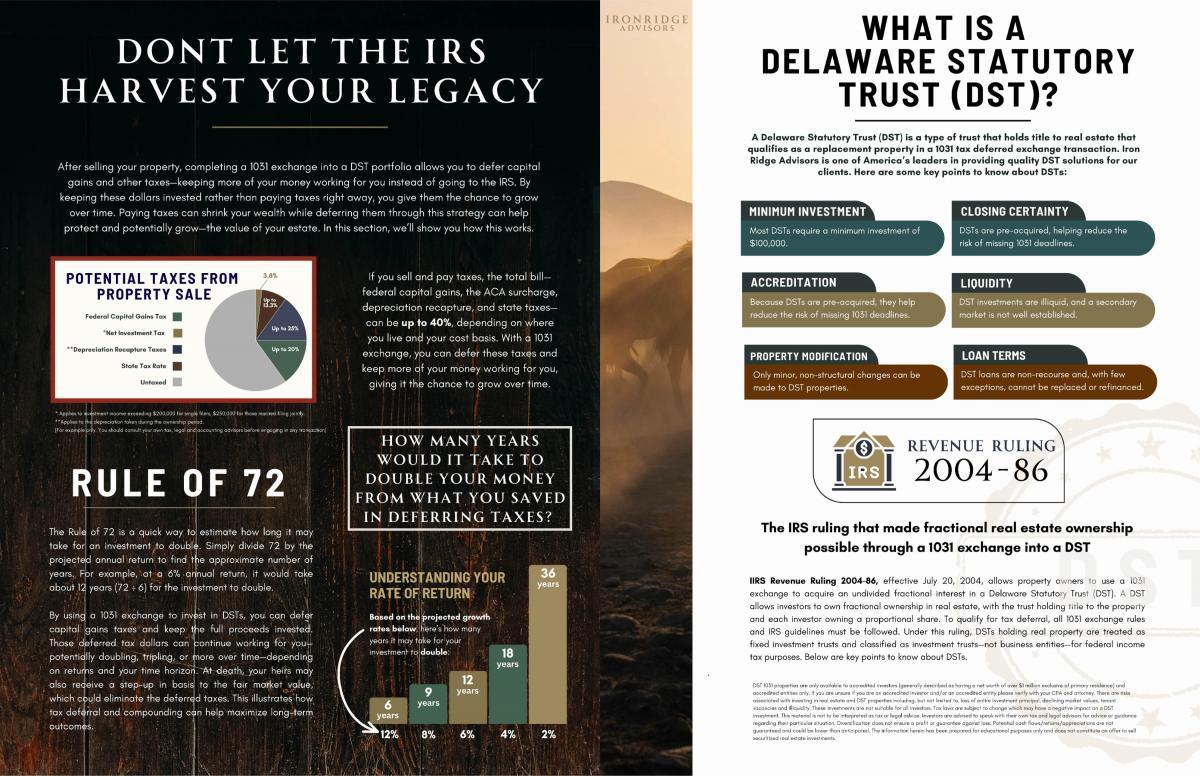
One strategy that doesn't get talked about enough in agriculture is a Delaware Statutory Trust (DST).
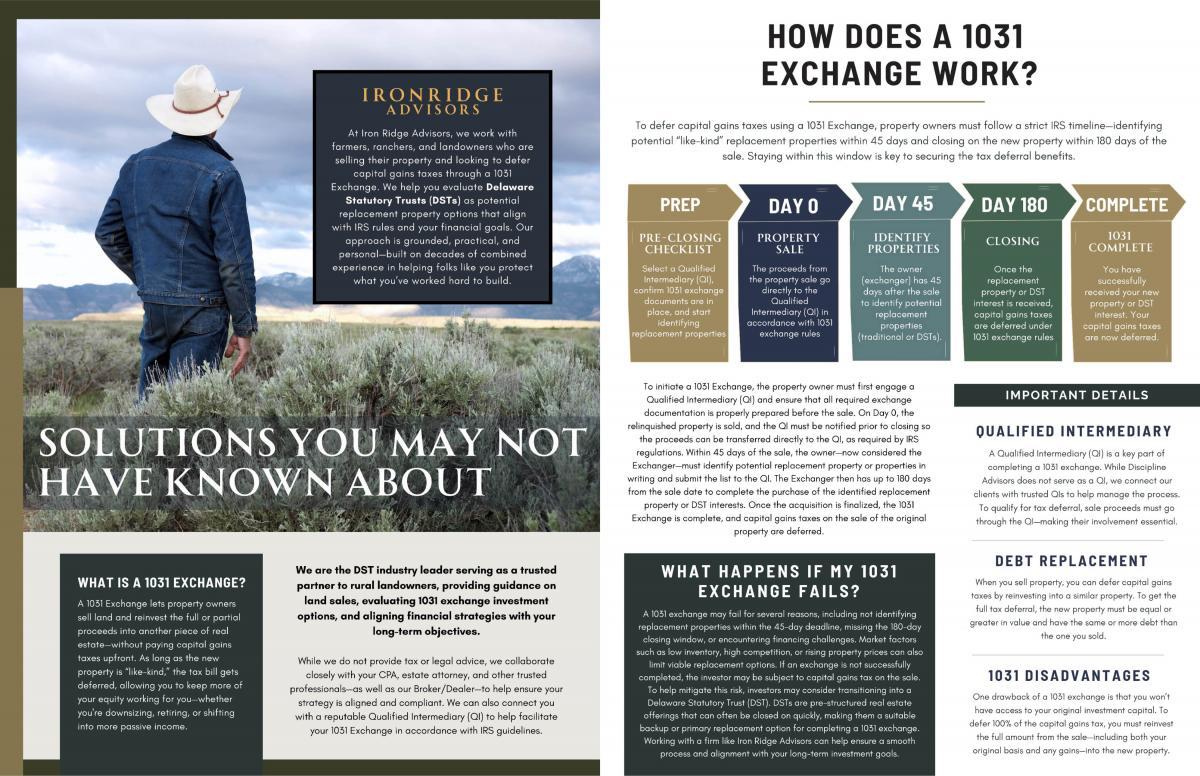
Think of a DST as a way to complete a 1031 Exchange without having to find, negotiate, and manage another farm, apartment building, or commercial property yourself. Instead, you can exchange into professionally managed real estate while still deferring capital gains taxes if the transaction meets IRS requirements.
Why are more landowners taking a look?
• You may be able to defer capital gains taxes through a 1031 Exchange.
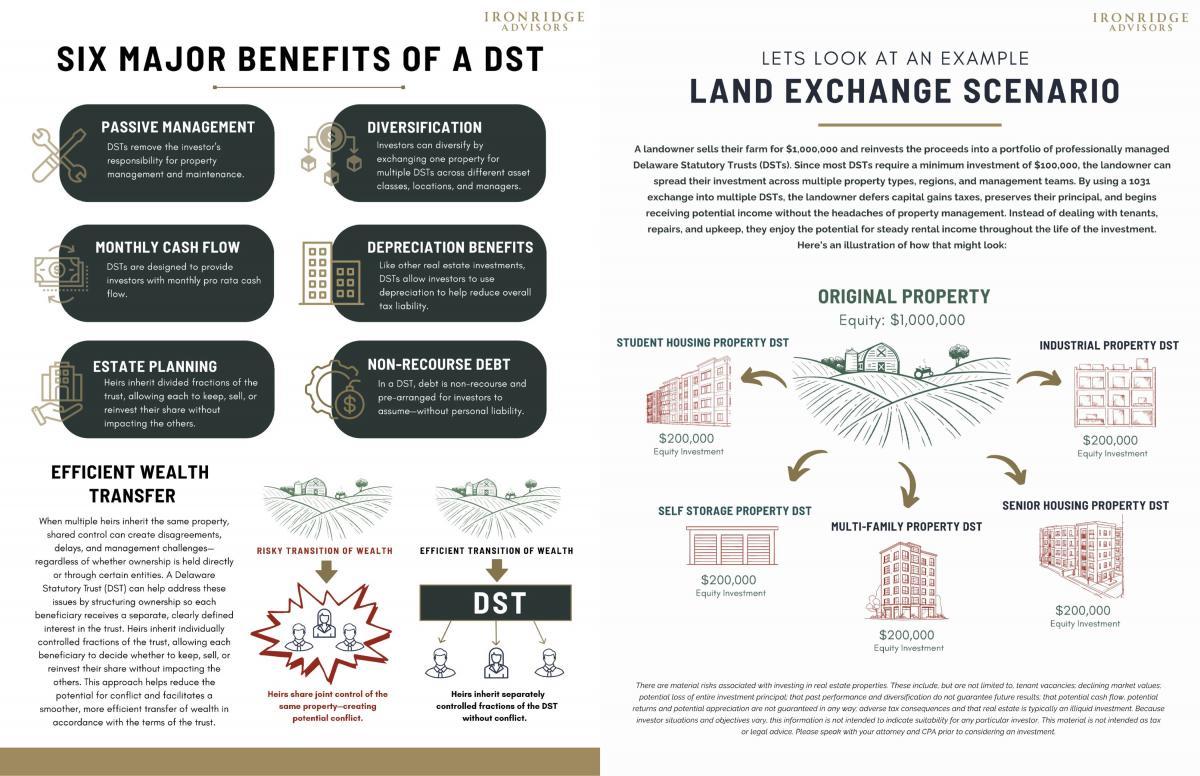
• You can diversify instead of putting all your money into one property.
• You don't have to worry about fixing fences, collecting rent, or replacing a roof.
• Many DSTs provide potential monthly cash flow while experienced professionals handle the management.
Let's say you sell a quarter of land for $2 million. Instead of buying another farm, you could exchange into several different real estate investments through DSTs, perhaps industrial, multifamily, self-storage, and senior housing. Rather than relying on one property in one location, your investment can be spread across multiple asset types.
Now, a DST isn't for everyone. These investments are generally illiquid, have minimum investment requirements, and are designed for investors who are comfortable owning a fractional interest in professionally managed real estate rather than controlling the property themselves. Like any investment, they involve risk and should be reviewed with your CPA, attorney, and financial advisor.
The bottom line? If you're thinking about selling farmland with a low tax basis, don't wait until the purchase agreement is signed to start planning. Some of the biggest opportunities are lost because the conversation starts too late.
Every landowner's situation is different. Before you write a large check to the IRS, it may be worth exploring whether a 1031 Exchange and a Delaware Statutory Trust should be part of the discussion.
Want to Learn More?
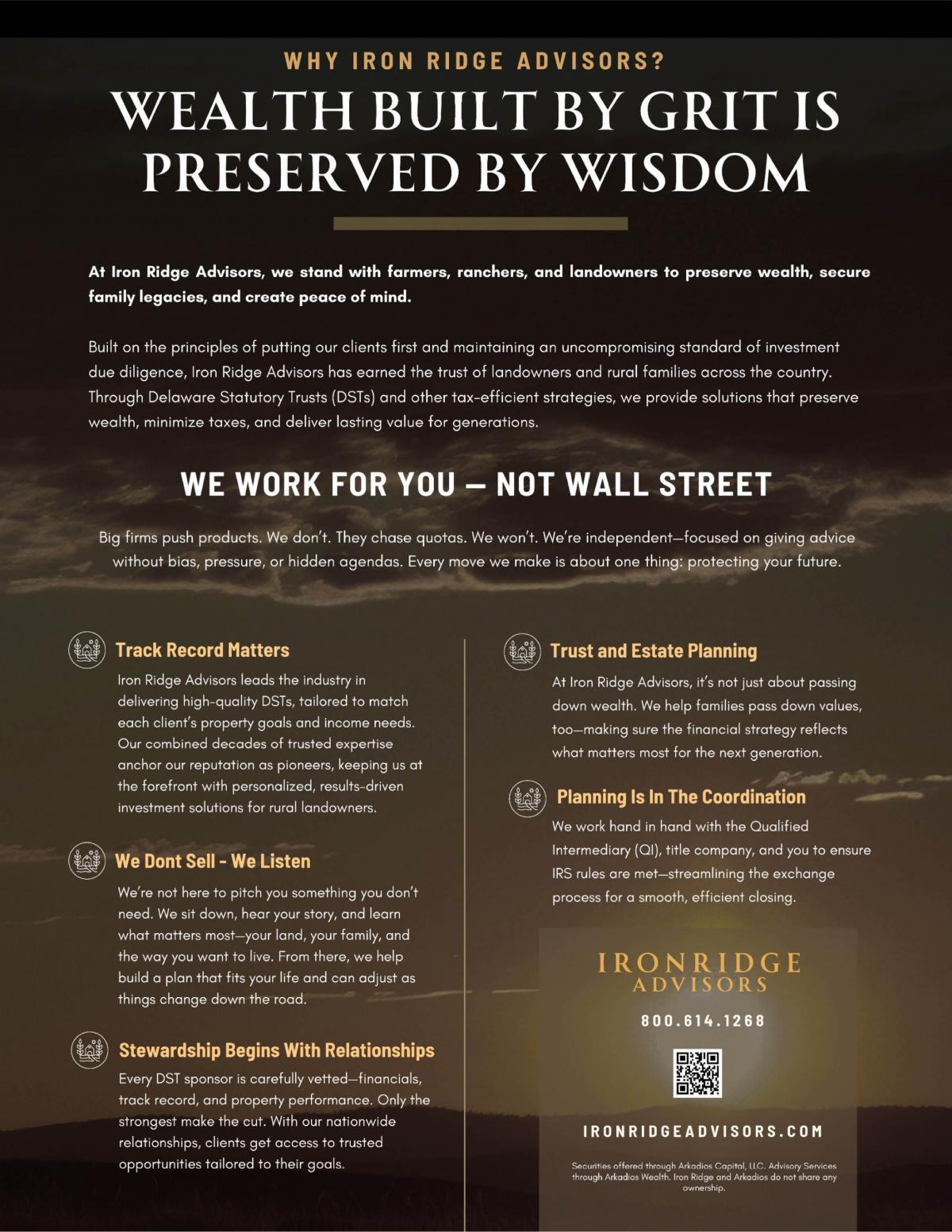
I recently came across a brochure from Iron Ridge Advisors that does a really nice job explaining Delaware Statutory Trusts in plain English. I've attached it because I think it's one of the better overviews I've seen. It's not a sales pitch from me, it's simply a good educational resource if you're wondering what a DST is and whether it might make sense after selling appreciated farmland. As always, visit with your CPA and advisors before making any decisions.
Author Bio: Steve Link is a Broker and Auctioneer with Pifer's Auction & Realty, specializing in farm, ranch, and recreational land across the Upper Midwest. Steve works with landowners on valuations, auctions, private sales, and long-term transition planning, helping families maximize the value of one of their most important assets, their land.