Auction vs. Listing: How Landowners Decide the Best Way to Sell
Two proven paths to a successful sale. The right choice depends on the land, the seller, and the moment.
One of the first questions landowners ask when they consider selling is a simple one: "Should we list the property or sell it at auction?"
It's a great question, and the honest answer is that both methods work. They just work differently.
The Case For A Traditional Listing
A listing works well when a seller has a clear price expectation and is comfortable being patient. If the buyer pool is smaller or more specialized, a listing gives the property time to find the right match.
Listings also offer flexibility. Price adjustments, extended timelines, and quieter marketing strategies are all on the table. For some sellers, especially those who aren't in a rush, that flexibility is exactly what they need.
The Case For An Auction
An auction is a different animal entirely, and it's one of the most exciting things to watch in the land business.
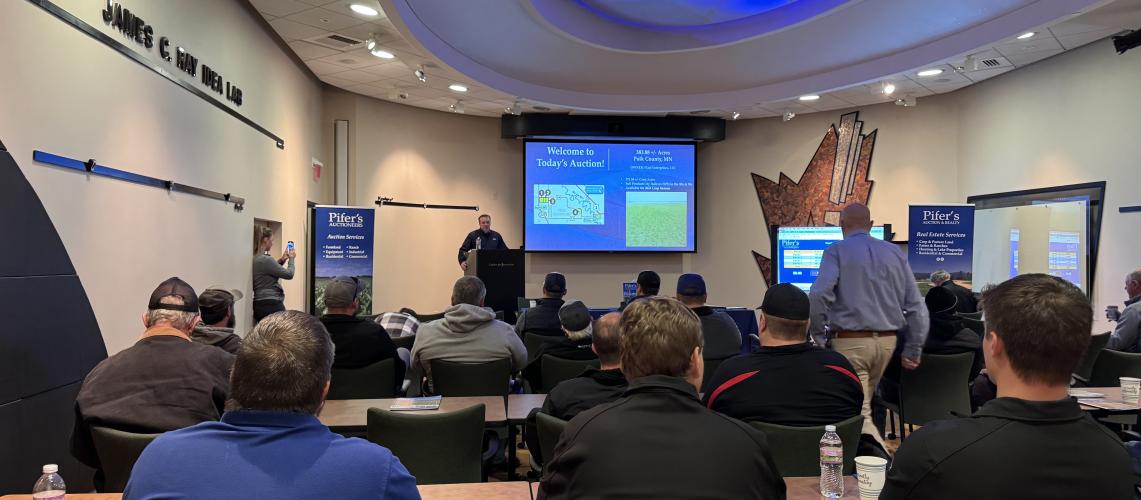
At auction, the market determines value in real time. Buyers compete openly, and that competition often produces stronger price discovery than anyone expected. There's something powerful about putting qualified buyers in the same room (or on the same bidding platform) and letting them tell you what the land is worth.
Auctions also compress the timeline. Instead of months of wondering, the process concentrates buyer attention into a focused window. Sellers get clarity, and they get it fast.
Another major advantage is transparency. Buyers know they're competing against real people with real money. Sellers know the result reflects genuine market demand, not a guess.
Here's something worth noting: in strong agricultural markets, well-run auctions frequently exceed pre-sale expectations. When you bring multiple motivated buyers together for a quality property, good things tend to happen.
So Which One Is Right?
There isn't a universal answer, and anyone who tells you otherwise is oversimplifying.
The best approach depends on the land itself, the number of potential buyers, the seller's timeline, and the broader market conditions. A great broker will walk through all of those factors before recommending a strategy.
What matters most is choosing a path that fits the property and the goals of the seller. The method should serve the situation, not the other way around.
Author Bio: Steve Link is a broker with Pifer's Auction & Realty, specializing in farm, ranch, and recreational land across the Upper Midwest. Steve grew up on a farm near Milan, Minnesota and earned a degree in Natural Resource Management from North Dakota State University (NDSU). With decades of experience in land sales, auctions, and land management, Steve works closely with landowners, investors, and agricultural operators to help them make informed decisions about one of their most valuable assets, land.